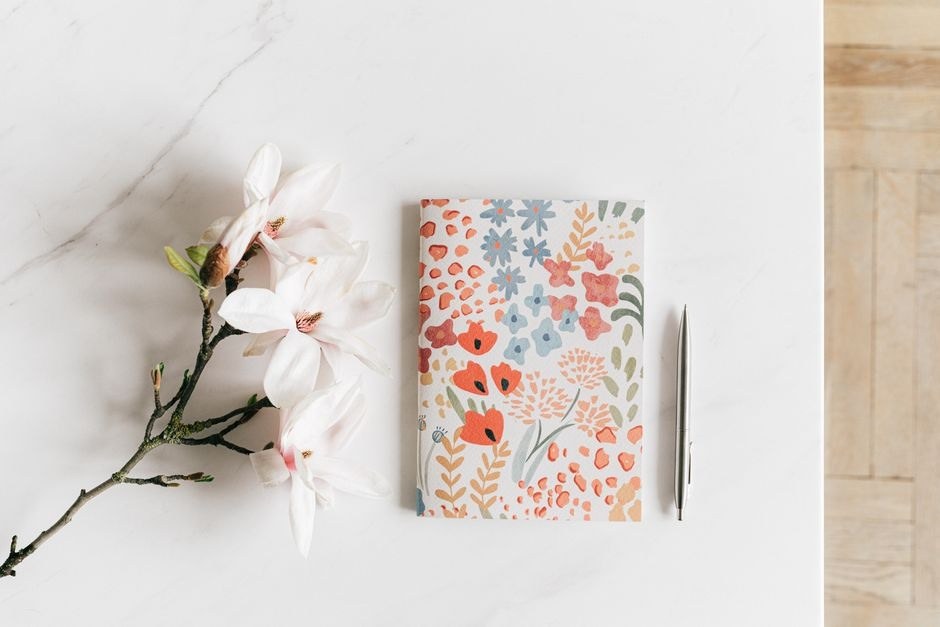
Some afternoons are best left deliberately small. A book, a pencil, a glass of water and a clear patch of table can be enough to turn an ordinary hour into one you remember. The trick is to create a welcoming place for reading without turning relaxation into another project.
Make the table inviting
Begin by clearing just enough space for the book and an open notebook. A flower in a simple vase or a small botanical postcard can provide a little color, but leave room to turn pages comfortably. Natural light is pleasant when available; a focused lamp works just as well when the afternoon fades.
Choose something you genuinely want to read, not a title you feel obliged to finish. A short essay, a chapter of a novel or a book of photographs all offer different rhythms. Give yourself permission to move between words and images.
Collect impressions, not complete summaries
Keep a loose page for stray observations. You might note a line of dialogue that made you laugh, a place mentioned in the text or a color combination from an illustration. A few sentences are enough. The notebook is a place to leave traces of attention, not an archive that must be perfectly maintained.
Paper keepsakes can sit beside these notes: an exhibition ticket, a small postcard or a sketch of a leaf. If you enjoy using pressed botanical specimens, choose responsibly collected or cultivated material and make sure it is completely dry before storing it with paper.
End with one thought to carry forward
When it is time to stop, close the book and jot down one thought that stayed with you. It might be a question or a description of a scene. There is no need to reach a conclusion. Often the purpose of a quiet reading afternoon is simply to have spent time with something interesting.
Leave the notebook within reach for another day. Over weeks, these scattered notes become a modest record of what you noticed, what you wondered about and which books kept you company.