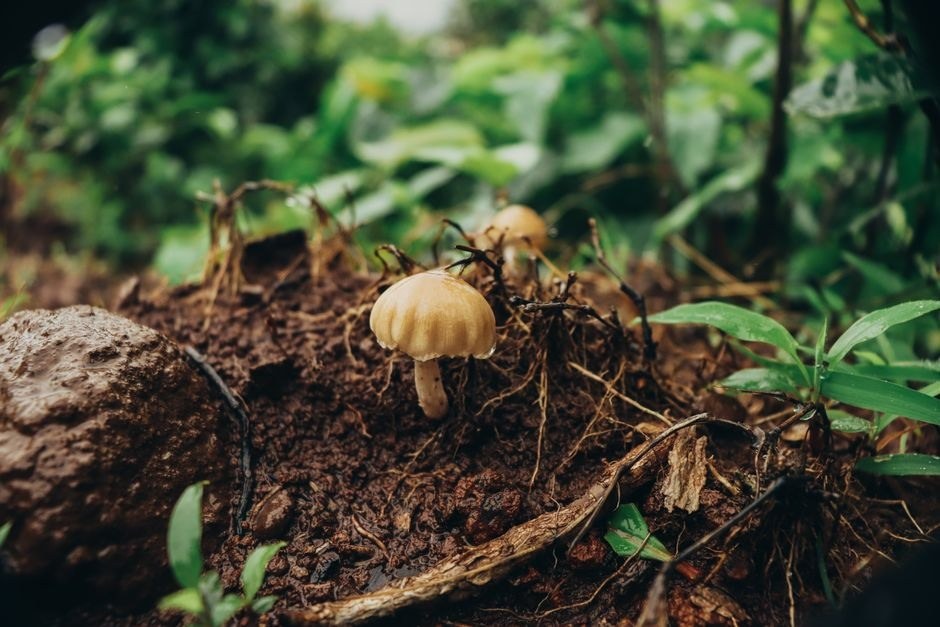
Look up in a forest and you see branches, gaps of sky and the larger architecture of trees. Look down and another landscape appears. Moss covers the base of a fallen trunk. Pale leaves overlap like paper. Tiny mushrooms rise from the soil after rain. An ordinary path offers far more detail than a hurried walk usually allows.
Slow down where the ground changes
The meeting of two surfaces is a good place to begin: a muddy bank beside a dry path, bark against moss, or a patch of sunlight reaching through dense foliage. These areas hold contrasts in texture and color that can make even a small section of woodland feel rich.
Pause without stepping off the trail. From a stable spot you can notice the way leaf edges curl, how drops of water gather in hollows and how plants occupy every small opening. A pocket notebook is useful for recording what the light was doing or which colors seemed especially strong that day.
Appreciate fungi without disturbing them
Fungi are a wonderful subject for observation because they come in so many forms, from delicate caps to shelf-like shapes on old wood. It is best to enjoy them where they grow. Do not pick or taste unfamiliar mushrooms; identification from appearance alone can be unreliable.
Photograph them from a respectful distance and include part of the surrounding habitat. The nearby moss, wood and leaf litter tell a richer story than an isolated close-up. If you want to learn names later, take several careful photographs rather than disturbing the scene.
Return after the weather shifts
Rain deepens the color of bark and makes small green plants shine. A bright afternoon brings out fine shadows. In autumn, a familiar track can change almost overnight as leaves collect in the hollows. The best woodland walk is often one you repeat, not one you complete.
Before heading home, take a final look at the path behind you. The same small landscape will appear different in reverse. That change of perspective is a reminder that noticing is a practice, and the forest always has more to show.